Cart
0
0.00 €
Béla Kéler was born in Bardejov at Town Hall Square (Radničné námestie) in a two-story Renaissance building No. 41 from the mid-17th century, featuring a facade adorned with stucco Classicist ornamentation. The family of Kéler's father, Stephan (1781–1849), owned not only house No. 41 but also the neighboring house No. 40, a villa in Bardejovské Kúpele, several large estates, and additional land and gardens in various parts of Bardejov. Following Stephan Kéler's death, the house was sold during probate proceedings. Béla Kéler later expressed regret that he lacked the financial means to purchase it:
"Had I possessed greater wealth at that time, I would have purchased my birthplace in Bardejov and provided it as a dower house for my sisters Amalia, Augusta, and Antonia. They could have managed my house in Bardejovské Kúpele." (Kéler, 1877)
Commemorative Plaques on the Birthplace
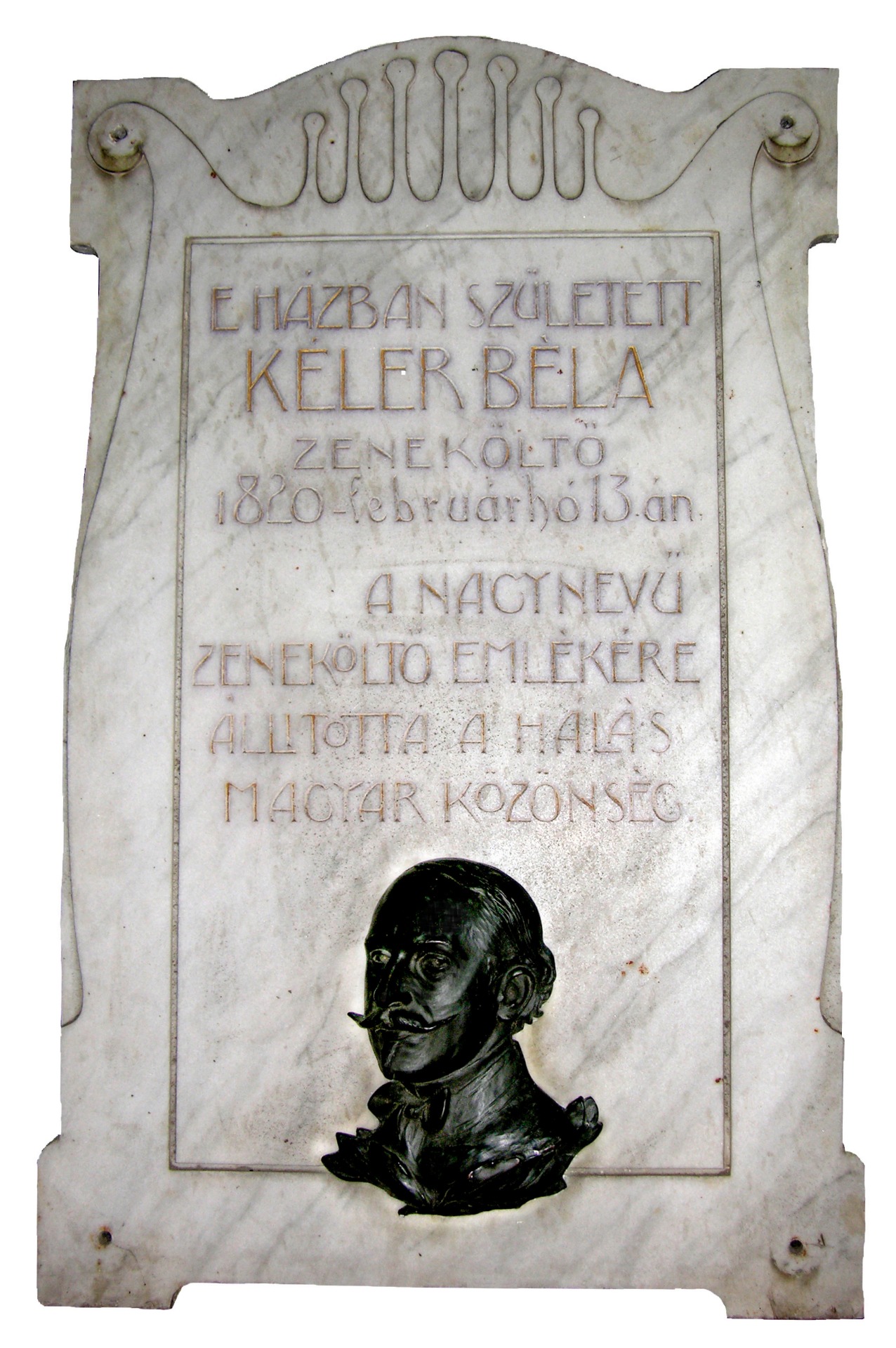
On August 19, 1906, a marble plaque featuring a relief bust by sculptor Béla Markup was solemnly unveiled on Kéler's birthplace. The contemporary press documented the ceremony as follows:
"The birthplace of Béla Kéler, the Hungarian composer born in Bardejov, was marked with a commemorative plaque. The military orchestra from Satu Mare opened the solemn ceremony with Kéler's Rákóczi Overture. Following speeches by Álmos Jaschik and museum director Antal Vas, Mayor Alajos Rhódy expressed gratitude for the dedication of the plaque committee and officially accepted the memorial plaque." (Budapesti Hírlap, 1906)
During World War II, in 1941, the commemorative plaque was removed. In 1952, marking the 70th anniversary of Kéler's passing, it was replaced with a new plaque. The original historical plaque was restored to the facade in 2011, and today both plaques are displayed side by side.
Present and Future of the House
Since 1989, the Town of Bardejov has been seeking a definitive purpose for Kéler's birthplace. The Béla Kéler Society is striving to establish the Béla Kéler Museum within the building, which would exhibit his estate—currently housed in the collections of the Šariš Museum—and serve as a venue for regular chamber concerts of his music.